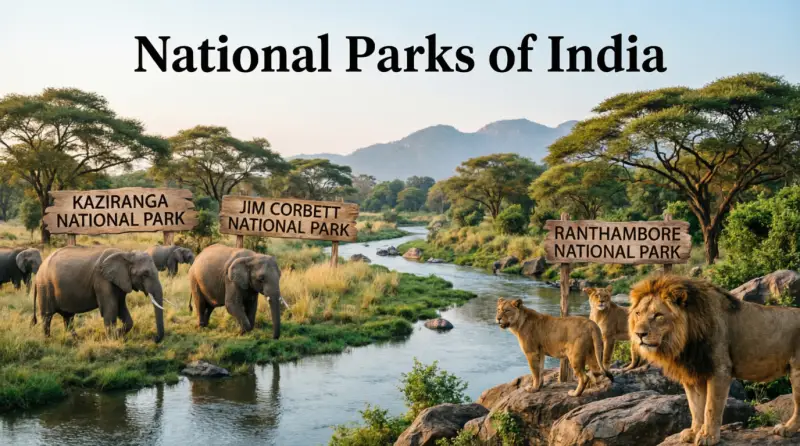
List of National Parks in India: State-wise Guide for UPSC, SSC & Banking Exams
India has 107 national parks covering approximately 44,403 sq km (1.35% of the country's geographical area) under the Wildlife Protection Act, 1972. These protected areas are crucial for conserving India's rich biodiversity and feature prominently in competitive exams.
Key Facts for Exams
- First National Park: Jim Corbett National Park, Uttarakhand (established 1936 as Hailey National Park)
- Largest National Park: Hemis National Park, Ladakh (4,400 sq km) – habitat of snow leopards
- Smallest National Park: South Button Island National Park, Andaman & Nicobar Islands
- Newest National Parks: Navegaon-Nagzira (Maharashtra, 106th) and Similipal (Odisha, 107th declared in 2025)
- UNESCO World Heritage Sites: Kaziranga, Sundarbans, Manas, Keoladeo, Nanda Devi, Great Himalayan, Khangchendzonga, and Western Ghats cluster parks
Must-Know National Parks State-wise (Exam Focus)
Uttarakhand: Jim Corbett (India's first), Valley of Flowers, Nanda Devi, Gangotri, Rajaji
Rajasthan: Ranthambore (tigers), Sariska Tiger Reserve, Keoladeo Ghana (Bharatpur – UNESCO World Heritage Site), Desert National Park (2nd largest in India)
Assam: Kaziranga (one-horned rhinoceros – UNESCO site), Manas (UNESCO site), Orang, Dibru-Saikhowa, Nameri, Dihing Patkai (declared 2021)
Madhya Pradesh: Kanha, Bandhavgarh, Pench, Panna, Satpura, Sanjay-Dubri – state with highest tiger population
West Bengal: Sundarbans National Park (largest mangrove forest, Royal Bengal Tigers – UNESCO site)
Gujarat: Gir National Park (only natural habitat of Asiatic lions), Vansda, Blackbuck National Park (Velavadar)
Karnataka: Bandipur, Nagarhole (Rajiv Gandhi), Bannerghatta – part of Nilgiri Biosphere Reserve
Maharashtra: Tadoba-Andhari (popular tiger reserve), Sanjay Gandhi (Borivali), Navegaon-Nagzira (106th NP)
Ladakh: Hemis National Park (largest in India), Changthang
Andaman & Nicobar Islands: 9 national parks including Campbell Bay, Mahatma Gandhi Marine, Mount Harriet, and South Button Island
Kerala: Periyar (elephants), Silent Valley (evergreen rainforest), Eravikulam
Himachal Pradesh: Great Himalayan National Park (UNESCO site), Pin Valley, Inderkilla
Odisha: Similipal (107th NP, declared 2025), Bhitarkanika (mangroves & saltwater crocodiles)
Top 10 High-Yield Parks for Competitive Exams
- Kaziranga NP – One-horned rhinoceros (Assam)
- Gir NP – Asiatic lion (Gujarat)
- Sundarbans NP – Royal Bengal Tiger & mangroves (West Bengal)
- Jim Corbett NP – First national park of India (Uttarakhand)
- Keoladeo NP – Bird sanctuary, UNESCO site (Rajasthan)
- Ranthambore NP – Tigers in historical fort setting (Rajasthan)
- Hemis NP – Largest NP, snow leopard habitat (Ladakh)
- Great Himalayan NP – Western Himalayas biodiversity (Himachal Pradesh)
- Periyar NP – Elephant reserve (Kerala)
- Manas NP – UNESCO site, golden langur habitat (Assam)
Important Distinctions for Exams
- National Park vs Wildlife Sanctuary: Human activity completely prohibited in NPs; limited activities permitted in sanctuaries
- Tiger Reserves: Many national parks also function as Tiger Reserves under Project Tiger (53 reserves as of 2024)
- Biosphere Reserves: Some NPs form core areas of larger Biosphere Reserves (e.g., Nilgiri, Sundarbans)
Note for Aspirants: While India has 107 national parks total, competitive exams focus on parks with UNESCO status, endemic/endangered species, tiger reserves, and recent additions. Memorize state-wise distribution of 15-20 major parks rather than attempting to learn all 107 names. Focus on unique features (e.g., Gir for lions, Kaziranga for rhinos) for MCQ-based questions.